SUMUTONE.COM | MEDAN — BDS Law Firm has denied allegations of extortion involving M. Fatih Ritonga, a resident of Pematangsiantar, in connection with the handling of a case reportedly related to suspected human trafficking (TPPO) at the North Sumatra Regional Police (Polda Sumut).
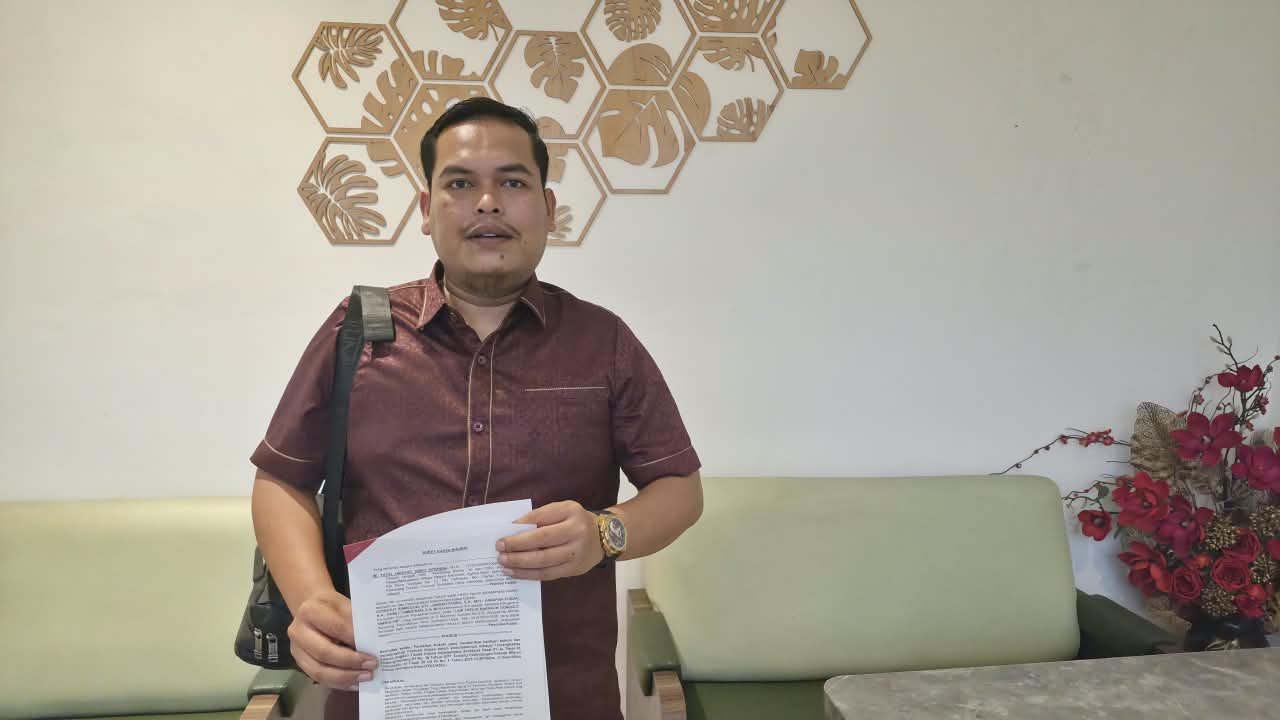
Barrack Donggut Simbolon, S.H., managing partner of BDS Law Firm, said the allegations were untrue. He stated that he held a special power of attorney authorizing him to provide legal assistance to Fatih Ritonga.
“The report is untrue. I have a special power of attorney authorizing me to provide legal assistance to my client,” Barrack said on Saturday (October 10, 2026).
He also firmly denied allegations that he had demanded up to IDR 1 billion to resolve the case.
“I never made such a request. Regarding legal fees or a retainer between me and my client, that is a matter of professional agreement. No one can arbitrarily dictate those terms,” he said.
Barrack explained that legal fees form part of the professional relationship between lawyers and their clients. According to him, the amount must be assessed based on the agreement and legal relationship between the parties.
He rejected claims that his actions constituted extortion, emphasizing that his legal representation was intended to assist his client in dealing with the ongoing proceedings.
“I reiterate that this matter should not be portrayed as extortion. The payment in question constitutes legal fees for handling the client’s case,” he said.
BDS Says Legal Assistance Is Ongoing
Barrack said his office had taken several legal steps on behalf of its clients, including submitting requests for suspension of detention and seeking opportunities for them to receive guidance and supervision from their families.
“As a lawyer, I provide legal advice and defense for my clients, including requesting that they be given an opportunity to receive guidance from their families,” he said.
Regarding the case’s status, Barrack said the legal proceedings were still underway at the North Sumatra Regional Police, specifically within the unit handling women and children protection and human trafficking cases.
He added that, as of the date of his statement, Fatih Ritonga had not revoked the special power of attorney granted to him.
“The legal process is still ongoing. As of today, Fatih Ritonga has not revoked my power of attorney,” Barrack said.
Special Power of Attorney and Pro Bono Services Are Different
Barrack also addressed the distinction between a special power of attorney and pro bono legal services.
Under Article 1795 of the Indonesian Civil Code, a power of attorney may be granted specifically for one or more particular interests.
Meanwhile, pro bono legal services refer to legal assistance provided by advocates without charging fees to eligible individuals who cannot afford legal representation. Such services are regulated under Article 22 of Law No. 18 of 2003 on Advocates and Government Regulation No. 83 of 2008.
The existence of a special power of attorney does not, by itself, establish whether legal assistance is provided free of charge or under a paid professional arrangement. The applicable terms depend on the circumstances and the agreement between the parties.
Barrack maintained that he was entitled to receive professional fees under the legal services arrangement in this case.
“Based on the special power of attorney, I am entitled to receive legal fees in accordance with the services provided. Allegations of illegal charges or extortion cannot automatically be established merely because an advocate receives payment,” he said.
BDS Considers Legal Action Against Media Outlet
BDS Law Firm also expressed objections to the publication of reports it considers damaging to its reputation. Barrack said his office was considering sending a formal legal notice, or somasi, and pursuing legal action against the media outlet that published the allegations.
He questioned the media outlet’s publication of information without what he described as clear corporate legal status, editorial details, or a newsroom address.
“Under Law No. 40 of 1999 on the Press, press companies must comply with the applicable legal and organizational requirements. The online news link we received did not clearly identify the legal entity, editorial structure, or newsroom address,” he said.
North Sumatra PWI Chairman Explains Press Company Status
Separately, North Sumatra Indonesian Journalists Association (PWI) Chairman H. Farianda Putra Sinik, S.E., explained that press companies in Indonesia may be distinguished by their legal status and whether they have been registered or verified by the Press Council.
He referred to Law No. 40 of 1999 on the Press and relevant Press Council regulations in discussing the different categories of press companies.
“If a dispute or legal claim arises concerning journalistic work, the available mechanisms and legal protections must be assessed in accordance with the applicable laws and regulations,” Farianda said on Saturday (October 10, 2026).
He also discussed the potential legal implications for media operators whose organizations do not have legal-entity status, particularly in cases involving alleged defamation or black campaigning.
Farianda emphasized that disputes involving journalistic publications should be assessed according to the applicable legal framework and the status of the media organization.
The clarification from BDS Law Firm and the explanation from the PWI North Sumatra chairman come amid the ongoing controversy surrounding the allegations. The extortion claims remain disputed, and the statements presented by the parties do not, by themselves, establish a legal finding of wrongdoing.